Saving a single sheet of paper is a small commitment to the nature — creating moreroom for life to thrive.
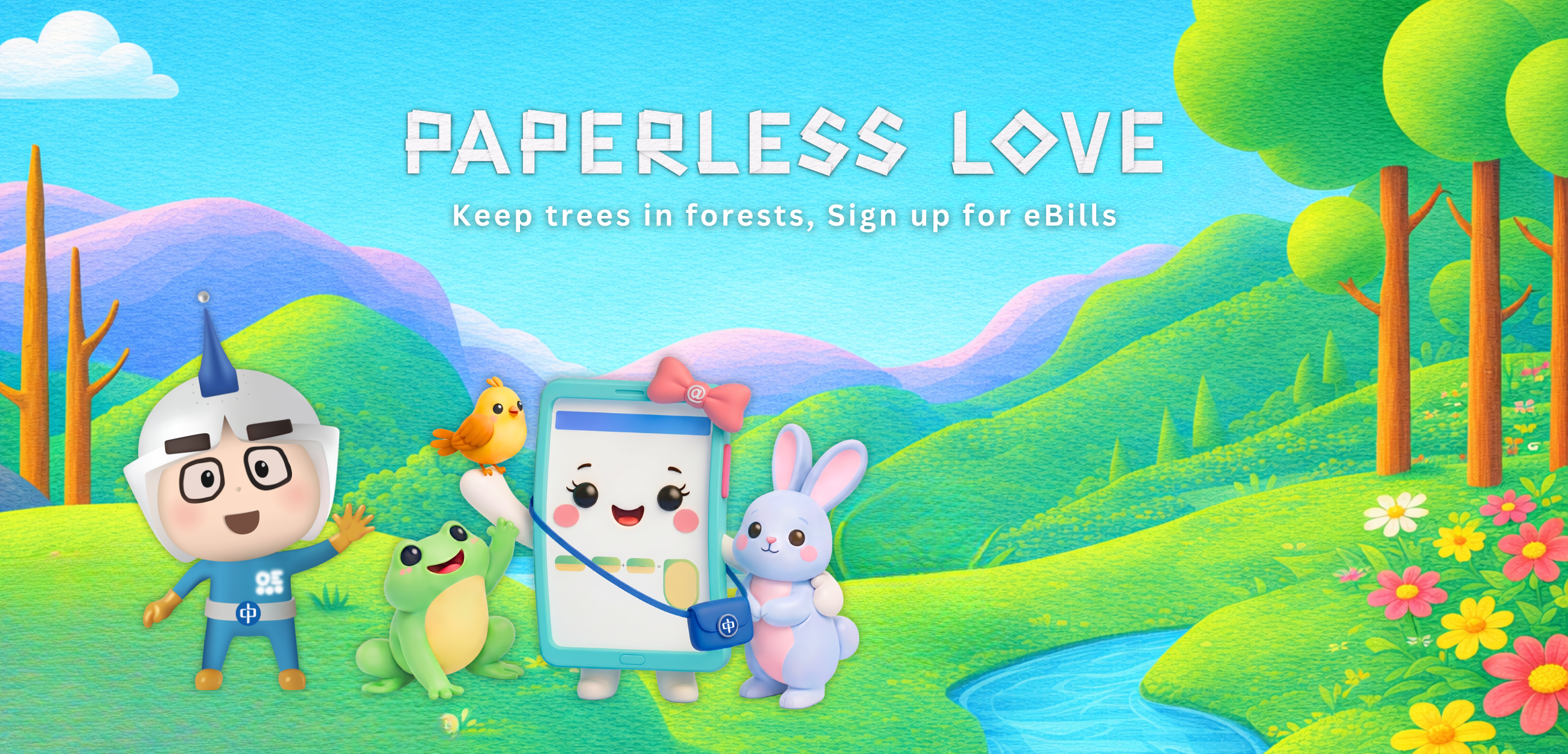
Power Kid and eBill Mui Mui have always believed that meaningful change starts with thesimple decisions we make daily. Snowy the rabbit, Romer the frog, and Lily the bird findsafety and comfort in this green sanctuary they call home. Every choice to go paperlessbrings us closer to protecting their habitat.
Join us by signing up for eBills and show your Paperless Love.
Gentle, thoughtful and always attentive, eBill Mui Mui cares deeply about nature and believes that small everyday choices can lead to meaningful change.
She is here to make receiving bills simple and stress‑free — no mailbox checks, no worries about late payments, and no misplaced bills, all in a clear, paper‑free view on screen.
Lately, eBill Mui Mui has been out and about with her little bag, sharing the benefits of eBill and handy tips with more people. She hopes to invite everyone to take action together!
eBill Mui Mui
Snowy loves nothing more than pushing his limits,breaking records, and steadily moving closer tohis dreams.
Yet, as landfills continue to expand, the spacesavailable for him to run and practice is shrinkingmore and more...
By switching to eBills, we can slow down thelandfill saturation, protect more natural habitats, and let Snowy and his friends continue to livefreely in wide open space.
Snowy the rabbit
Quiet and introverted, Romer prefers to dive intothe pond and spend time in peaceful reflection,enjoying moments in his own space.
Unfortunately, wastewater discharged fromupstream paper mills has gradually polluted thewater, taking away the clear and comfortablehabitat he once had.
By switching to eBills, we can reduce theindustrial wastewater from paper production, restore the purity of natural water sources, and allow Romer to return to a safe and quiet habitat.
Romer the frog
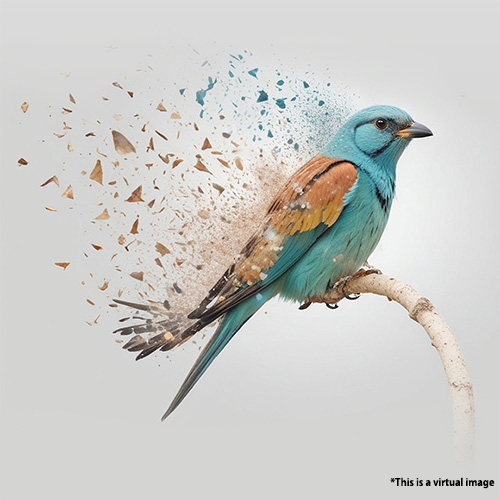
Lily, a gentle and attentive little bird, embodiesmaternal care, always watching over those aroundher to ensure they have enough to eat and staywarm.
However, as she gets ready to start her own family,she sadly notices that the forests ideal for nestingare steadily vanishing.
By adopting electronic billing, we can contribute toreducing global deforestation, helping forestsrecover so that Lily can securely build her nest.
Some banks already accept eBill as address proof. Government departments also accept our eBill as proof of address through the iAM Smart platform. For details, please click here.
You can download your eBill anytime, anywhere. Avoid the hassle or potential of late or lost mail due to unexpected delivery issues.
I’m afraid I might forget to settle my payments without a paper bill.
Once you apply for an eBill, you will receive eBill notifications from clpebill@mail.clp.com.hk every time a new bill is issued for your account.
You can also download and active the ‘Payment Alert’ on your CLP App. Payment alerts remind you to make your payment two days prior to your due date. For more information, please click here.
Will eBill put my personal data at risk?
Sensitive information on eBill, such as customers’ names and addresses, are partially obscured to ensure data security. Customers also undergo identity verification to download copies of their eBill from the CLP website or the CLP App.
Take the first steps and help save the environment with eBill Mui Mui.
Learn more about how plants and animals are dealing with climate change.
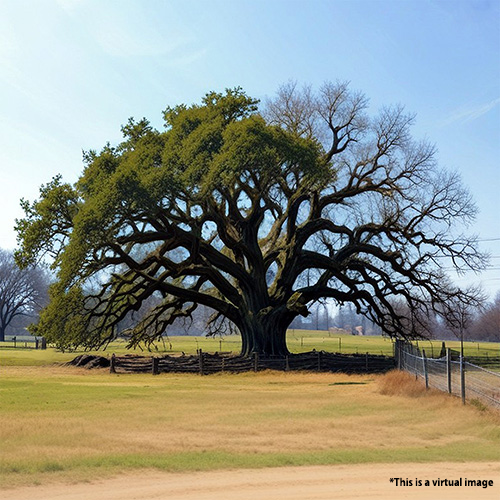
When you walk around Hong Kong, you'll see Chinese Banyan trees everywhere. These trees are old friends to Hongkongers. They're great for shade, resist drought and wind, and sometimes grow into tree root walls, creating a unique cityscape.
With shifting weather patterns in recent years, what kind of challenges do these trees face? The Chinese Banyan is like a "climate thermometer," showing how global warming affects Hong Kong. Heavy rains and storms not only break the branches but also damage the trunks. Last year's typhoon season and the 'Black Rainstorm of the Century' led to nearly 8,000 trees being cut down, many of which were long-standing Chinese Banyans.
Global warming has also worsened pest problems. The banyan tussock moth, a common pest in Hong Kong's urban areas, is a significant threat to the Chinese Banyan. It used to only appear in the warm springs and summer, but now it continues to grow even in warm winters.
Pest infestations have sparked heated discussions, drawing attention from the public and authorities. Twelve Chinese Banyan trees at Park Lane Shopper's Boulevard, listed as Old and Valuable Trees, were almost completely defoliated by these moths.
Old trees help stabilise the climate. Research shows that old trees are better at resisting drought and storing carbon compared to younger trees. Losing these old friends means we lose key allies in fighting climate change.
To protect these trees, we can start by living a low-carbon lifestyle and reducing carbon emissions in every aspect of our lives, like switching to e-bill to reduce paper use.
With severe climate change in recent years, including unusually hot weather, scientists have been closely watching how extreme heat affects animals. Recent studies show that rising temperatures are causing slow but noticeable changes in animal features to help them cope. For instance, elephants' ears, which help dissipate heat, are growing larger to help them manage higher temperatures.
Scientists tracking elephants in temperate zones found that their ears have grown 10% larger over the past few decades. They warn that if this continues, we might see real-life versions of floppy-eared Dumbo in the future.
Elephants not only suffer physical deformities due to extreme weather but can also die from dehydration. Last year, more than 100 elephants in Zimbabwe National Park died of heat exhaustion due to drought.
Saving elephants is crucial because they play a big role in the ecosystem. They spread plant seeds over large distances through their dung, helping forests grow. Trees absorb a lot of carbon dioxide, fighting climate change. Losing elephants means losing key defenders against climate change.
Whether it's elephants or forests, it's important to join conservation efforts so that our precious nature can thrive. Start by protecting trees in our lives, such as signing up for ebills to reduce paper waste.
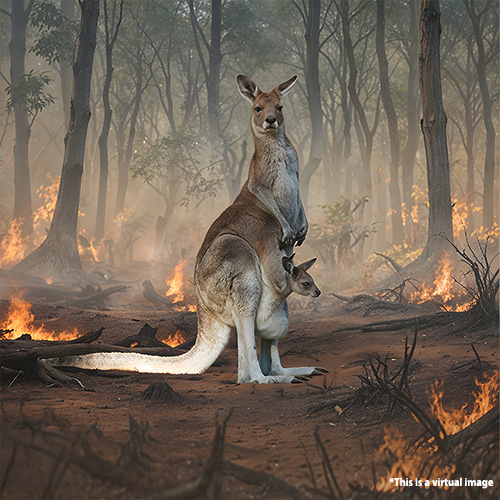
In 2024, Texas had the worst bushfires in her history, killing more than 10,000 livestock. These catastrophic fires are becoming more common—Hawaii, the west coast of Canada, and Greece were also hit by bushfires in 2023, with a major fire happening almost every two months.
The devastating bushfires in Australia in 2019-2020 are still fresh in our minds. Climate change didn't cause these fires but made them worse. Australia's bushfires were a natural phenomenon, happening on a small scale in spring, summer, and fall. However, global warming has led to more intense heatwaves and longer dry periods, creating tinderbox conditions that intensified the fires. The result was the most destructive bushfires in Australia's history, killing over 1 billion animals, including more than 5 million kangaroos and wallabies and 12,000 koalas. The surviving animals lost their habitats, and the severe impact continues today.
Bushfires don't just destroy forests and animals; they also threaten human homes. Rain washes fire ash and sediment into waterways, contaminating water supplies.
The increasing frequency of abnormal high temperatures is a warning sign that the planet is heating up. It's more important now than ever to protect our trees.
Fireflies lighting up the night sky are a beautiful and magical sight. Unfortunately, it's now difficult to see fireflies in Hong Kong. What happened to them?
Fireflies are very picky about their living environment. They only thrive in places with good ecological conditions like rivers, wetlands, and forests. In some places, such as Japan, the presence of fireflies is used as an indicator of environmental health. Fireflies are also natural "pest killers," preying on snails that eat crops and slugs with parasitic diseases.
However, human development has continuously damaged ecosystems. Between 1970 and 2015, about 35% of the world's wetlands disappeared, and a quarter of the species that live there are now at risk of extinction, including fireflies. In Hong Kong, three local firefly species are listed as endangered, including the Mai Po Bent-winged Firefly.
Wetlands are not just habitats for wildlife but are also known as the "Earth's Kidneys“. They help to clean water, prevent floods by soaking up heavy rainfalls, and store a significant amount of carbon, helping to mitigate climate change.
We can still protect fireflies and nature. We can start by living a low-carbon lifestyle and reducing our carbon footprint in every aspect of our lives, like switching to ebill to reduce paper use.
Many Hongkongers are food lovers. But while we're enjoying the food on our plates, the menus are being rewritten by the worsening weather conditions caused by climate change. Rising temperatures, intense rainfall events, droughts, and pest problems cause not only crop failures but also food spoilage and deterioration. Here are some foods that are being affected by the climate crisis:
◉ Rice, the Lost Crop ◉
Rice is one of the most important crops affected by climate change.
According to a UN report, in the worst-case scenario, the rice production of Thailand, Vietnam and Indonesia could drop by 50% by the end of this century if carbon emissions continue at the current rate. Rice in Hong Kong, has seen significant price increases over the past few years, making it truly "the fruit of hard toil."
◉ Climate Change is Making Your Coffee Bitter and Expensive ◉
Coffee production heavily depends on rainfall and temperature. The impacts of climate change are severe: reduced yields, lower quality, and higher frequency of pests and diseases. This changes the flavor and quality of coffee, and some varieties may become extinct. One multinational drink processing conglomerate corporation has warned that 50% of the land currently used for coffee growing will no longer be viable in 30 years if climate change is not addressed.
◉ Potato Chip Fan's Nightmare: Who Stole My Potato? ◉
Climate change could be a nightmare for potato chip fans. Major potato-growing regions have suffered harvest losses due to typhoons. For instance, in 2017 Japanese potato chip makers faced major supply chain issues of potato, and Hongkongers' favorite "Pizza" flavors were out of stock for a long time.
We might envy the freedom of migratory birds flying across continents, but their journeys are not easy. Worsening climate change threatens their survival as they search for suitable feeding, breeding, and resting grounds.
Climate change has hit Africa hard in recent years, causing catastrophic droughts and hotter, drier weather. Studies by conservation organizations show that migratory birds travelling through Africa face severe water and food shortages at their stopovers, threatening their survival. Some birds are forced to change their migration patterns, staying in cooler, northern regions and becoming ‘resident birds’ instead.
The survival of not just adult birds but also nestlings is at risk. Many bird species, like the Eurasian tit, rely on a plentiful supply of caterpillars in spring to feed their young. Climate change causes springs to start earlier, leading to caterpillars hatching earlier. By the time the birds hatch, the caterpillars have turned into adult insects, leaving the nestlings without enough food.
The tragic situation facing birds today is caused by climate change. The only way to turn things around is to mitigate the climate crisis. We can take action by living a low-carbon lifestyle and reducing our carbon footprint in every detail of our lives, for example, switching to ebill to reduce paper use.
Many people dream of travelling to Japan to enjoy the picturesque fall foliage. However, your trip might be cut short due to global warming.
Japan calls days above 25 degrees Celsius "summer days." Last year, Tokyo had 143 summer days, with a record high temperature of 27.5 degrees Celsius in early November. The heat is unbearable for locals and tourists alike.
High temperatures affect the formation of autumn leaves. Typically, short daylight hours and low temperatures in autumn cause the chlorophyll in leaves to decompose, turning them yellow and red. However, warm, dry autumn days brought by climate change delay this process, causing leaves to fall without changing colour.
Besides Japan, other high-latitude countries like South Korea and Canada also face the problem of "disappearing maple leaves." To help combat global warming, we must reduce carbon emissions by adopting a low-carbon lifestyle, such as registering for ebills to save paper and protect trees.
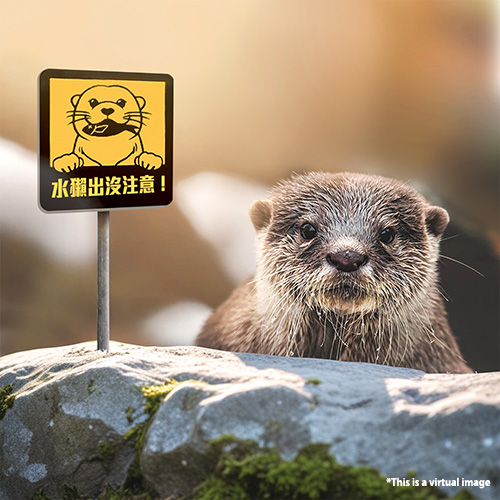
Many people have enjoyed the animated films "Zootopia" or "Madagascar," marvelling at the diverse species in the world. However, many don't realise the connection between biodiversity preservation and climate change. The Eurasian otter, a neighbour to Hongkongers, highlights this link.
The Eurasian otter is an important indicator of aquatic environments, requiring abundant food and clean water systems. It is a top predator in wetlands. Rapid urban development caused their disappearance from Hong Kong until the late 1980s. The latest records show only seven Eurasian otters in Hong Kong, now found only in the northwest New Territories wetlands.
If they disappear again, it would indicate deteriorating wetland conditions and the loss of a top predator needed to maintain ecosystem balance.
Why should we conserve Eurasian otters and other rare animals? Biodiversity and climate crises are interlinked. Protecting rare animals is about preserving the diversity of life. The more species in an ecosystem, the less likely it is to collapse due to changes in a few species. Healthy ecosystems help regulate climate, slowing down climate change.
In an ecosystem, "no one should be left behind," as each species has a unique role. Protecting them means giving them a suitable habitat. Small daily changes, like registering for ebill and switching to eservices, can significantly reduce our carbon footprint and protect trees.
Switch to eBills and stop receiving paper bills to enjoy a range of rewards and eco-friendly experiences, including:
1. Earn Domeo points
500 points for first-time subscription
100 points for each eBill notification
Rewards up to 1,100 points for the first year
2. Green Experience
Opportunities to participate in various green initiatives, including tree‑planting activities, and contribute directly to nature conservation
3. CLP × My Treelings - “Paperless Love” Creative AI Treelings Contest
Bringing together AI technology and green creativity to put the “Paperless Love” idea into action
Through AI image generation and storytelling, primary school students are encouraged to use their imagination to create new living scenes and stories for Treelings, expressing their vision of a paperless future
Log inSee moreSee allMenuHomeSearchDid you meanPageHelp and supportDownload our appBusiness objectivesresults foundAccept and continueStart dateEnd dateEvent typeEnviroment relatedPreferred disciplineFirst PreferenceOther PreferenceProject focusProject codeInternship typePagesHelps and supportCourse durationSelect course durationCourse typeforFilter ByClear allShowing {0} of {1} resultsSort byEarliest start dateOldest start dateInternship start dateInternship end datePlease stay tuned for upcoming openings.CalculateKey in the figures and press calculate buttonTotal Carbon emission(kg/COApprox. number of trees plantedElectricity consumption(units)Bill CalculatorBilling Start DateBilling End DateTariff TypeConsumption Unit(kWh)Number of Billing DaysThe earliest date you can select is the 1st day of previous calendar year.Residential TariffConcessionary Tariff for the ElderlyCalculation DetailsNotes:Charge (HK$)DetailsConsumption PeriodRate (HK$)Large Power TariffLarge Power Tariff with High Voltage Super DemandHigh Load Factor Rider DiscountYesNoOn-Peak Period Unit (kWh)Off-Peak Period Unit (kWh)On-Peak Maximum Demand (kVA)Off-Peak Maximum Demand (kVA)Please select datePlease input Consumption UnitThis bill calculator is meant to calculate electricity charges for previous and current years only.The bill calculator can only calculate the budget electricity bill for up to 90 days.Start Date cannot be later than End Date.Please select Tariff TypePlease select High Load FactorPlease input On-Peak Period Unit (kWh) Please input Off-Peak Period Unit (kWh)Please input On-Peak Maximum Demand (kVA)Please input Off-Pear Maximum Demand (kVA)On or off peak demand, whichever is higher, should not less than 35,000 kVAThis topic is related toCustomer Service centreNoteTipView All10 sec videoAs a , I want toResidential customerBusiness customer No data District Sub-districtRecalculatePlease input Number of Billing DaysConsumption UnitkVAkWhEnergy chargeEnergy saving rebateFuel cost adjustmentConcessionary tariffRent & rates special rebateTotal amountEnergy charge on peakEnergy charge off peakDemand charge on peakDemand charge off peak2022 Special rebate2023 Special energy saving rebateSpecial fuel rebateBilling demand shortfallHigh load factor rider discountSearch Help and SupportLatest updateCustomer Service HotlinesYearMonthJanuaryFebruaryMarchAprilMayJuneJulyAugustSeptemberOctoberNovemberDecemberDownloadLink copiedresultsSorry, something went wrong. We can't get that information right now. Please try again later.FeedbackHow would you rate the overall website experience today?Please tell us more(optional)Leave us your comments (optional)SubmitBill CalculatorEV TariffEV Residential Time of Use TariffThe earliest date you can select is {0}.The earliest date you can select is the 1st day of previous calendar year.help-supportApplySortingMost RecentMost RelevantTypeFilesWebpagesSectionBusinessResidentialeMobilityCommunityEnvironmentEducation & developmentHelp & supportFiltersFilteringAll PagesAll Types